
More Than Data: The Woman Behind the Systems at St Michael's
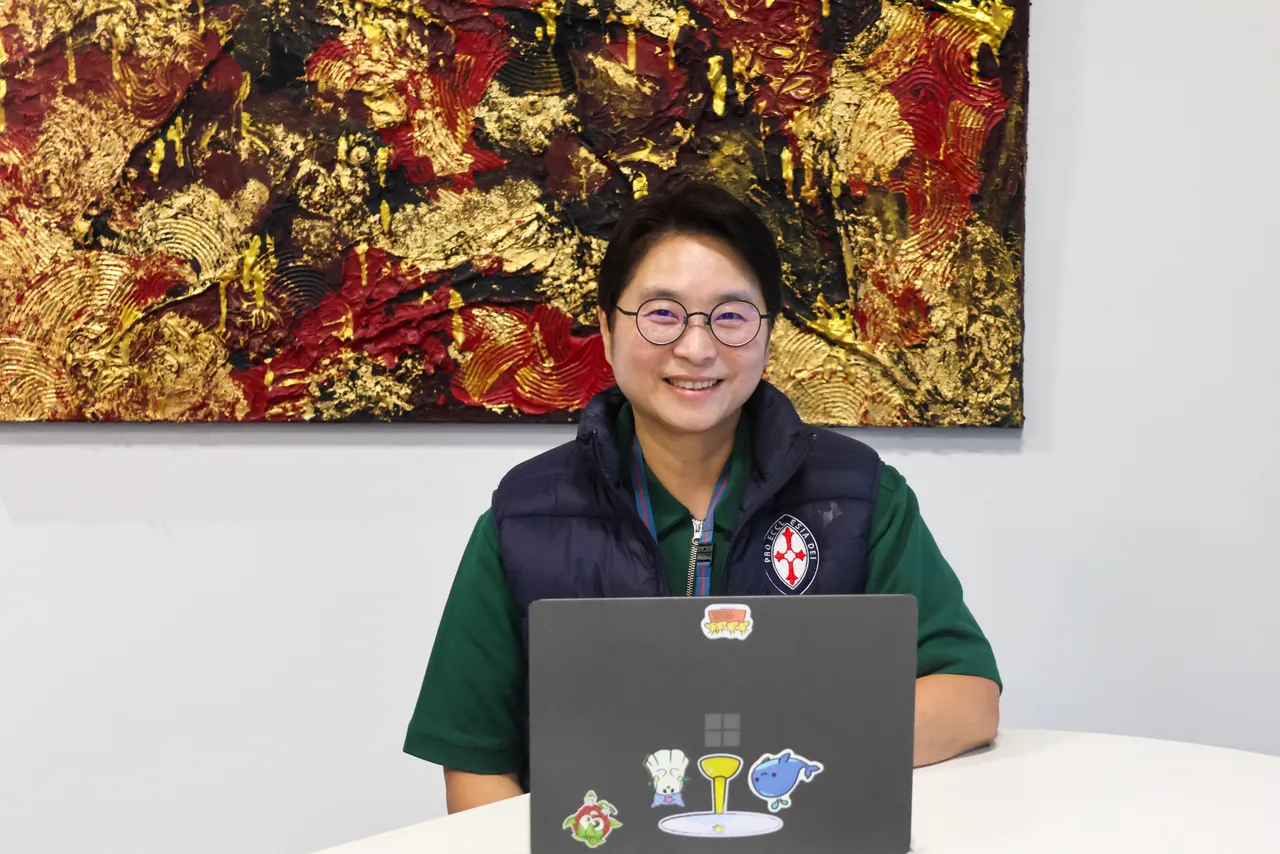
KENISE TONG is everywhere on campus at St Michael's.
As the school's Data Lead, her impact spans teaching, learning, enrolments, finance, and operations. But ask her colleagues, and they'll tell you it's less about the data than the person behind it — a partner who educates, empowers, and always centres privacy. A champion for women in IT and a passionate advocate for those who face additional hurdles to belonging, Kenise brings something rare to her work: she has lived the experiences she now helps others navigate.
Ask her what the job is really about, and she will not say data. She will say people. In three and a half years at St Michael's, she has built a reputation for translating the language of systems into something genuinely useful for the teachers, leaders, and teams who rely on them.
But the instinct she brings to that work, for what people actually need, and what it costs when they feel unseen, was shaped long before she entered a school as a staff member. It was shaped when she entered one as a thirteen-year-old, alone, in a city she did not yet know how to navigate.
We sat down with Kenise to talk about her career, her journey between cultures, and what she believes schools owe to the students who arrive from somewhere else.
The Role
Kenise's title is Senior Business and Process Improvement Analyst, but the scope of her work extends well beyond any job description. At its heart, her role is about connecting the dots between systems, data, and the people who depend on both.
In simple terms, what do you do for St Michael’s?
A big part of my job is looking after our school applications and the data within them, making sure our systems are reliable, secure, and working well together.
In simple terms, I help turn data into meaningful information that supports the day-to-day running of the school. That includes working closely with teaching staff, Finance, Enrolments, and School Operations.
A large part of my role involves meeting with different teams to understand their needs, challenges, and processes. From there, I help design solutions that improve efficiency, reduce manual work, and make information easier to access and use.
Ultimately, my role is about solving problems and finding smarter ways for technology to support people, so staff can spend less time dealing with systems and more time focusing on students and learning.
What drew you to education as a field?
I started my career in Education IT as a Database Administrator at Geelong Grammar School, looking after the school’s management systems. Very quickly, I realised how much I loved working in education because I could see how my role could have a real impact on people and on future generations.
Over the years, I’ve worked across different areas of school systems, data, reporting, and digital transformation at schools including Caulfield Grammar School and Mount Scopus Memorial College, and now here at St Michael’s.
What I enjoy most about working in schools is that technology is never just about systems, it’s about enabling people. Whether that’s helping teachers save time, supporting student wellbeing and learning outcomes, or giving leaders clearer insights to make informed decisions, the work has a real human impact.
Finding Her Place in IT
Kenise entered a field where women have historically been underrepresented. Rather than letting that discourage her, she channelled it into a determination to keep learning, keep asking questions, and prove her value through depth of understanding.
IT has traditionally been a male-dominated space. Was that something you were aware of when you started out?
IT has traditionally been a very male-dominated space, and I was aware of that even before I entered the workforce. Early on, I often felt that women in IT had to work harder to be heard or taken seriously, and I definitely felt that pressure myself.
As an Asian woman, I also worried that there might be fewer opportunities for me, so I spent a lot of time trying to prove myself. I pushed myself to keep learning, to ask questions, and to really understand not just the technology, but the people, systems, and problems behind it.
“Don’t wait until you feel completely ready, because confidence often comes after you take the first step.”
What would you say to young women thinking about a career in technology?
My advice to young women, is to back yourself. Don’t wait until you feel completely ready, because confidence often comes after you take the first step.
Keep learning, ask questions, speak up, and don’t underestimate what you bring to the table. IT is not just about technology; it is deeply human-centred. A big part of the work is listening, problem solving, understanding people’s needs, and designing solutions that make life easier for others.
There are so many different pathways in IT; data, cybersecurity, systems, project management, business analysis, digital transformation, user experience, and leadership. You don’t have to fit one stereotype of what an “IT person” looks like.
We need more female voices in IT. We need different perspectives, different experiences, and different ways of thinking to help shape better technology and better solutions for the future.
Arriving in Australia
Before Kenise became the calm, capable professional her colleagues know today, she was a thirteen-year-old navigating a new city, a new language, and a new school — armed with excitement that quickly gave way to something much harder.
You came to Melbourne as an international student at thirteen. What do you remember about those first weeks?
I came to Melbourne from Hong Kong as an international student when I was 13. At the time, I thought I was going on this exciting adventure, new country, new school, new life. I was full of excitement before I arrived.
But after about a week, the reality really hit me. I had the biggest culture shock. I grew up in Hong Kong, where everything was fast, bright, busy and convenient. I lived in a central area where I could walk downstairs from my apartment and there would be shops, restaurants, department stores and people everywhere. The city was still alive late at night.
Melbourne felt completely different. It was much quieter, shops closed early, weekends felt slow, and suddenly I had to travel more than an hour to get to school. I didn’t speak English very well, I didn’t have any friends, and I remember feeling really lonely. I went from being surrounded by people and familiarity to feeling like I had to learn everything again; the language, the culture, the transport, even how to make friends.
“I went from being surrounded by people and familiarity to feeling like I had to learn everything again; the language, the culture, the transport, even how to make friends.”
Were there particular moments that crystallised how hard it was?
I still remember my second day of school. I got lost on the way and actually walked past the school without realising. I was too nervous to ask anyone for directions because I didn’t feel confident speaking English. When I finally arrived, I was 30 minutes late to class. The teacher asked why, and I said, ‘I got lost.’ Both teacher and students laughed, and I remember feeling so scared, embarrassed and sad.
Looking back, I don’t think anyone meant to hurt me, but that moment stayed with me. It reminded me how vulnerable it feels to be new, to not have the words, and to not yet know where you belong.
Over time, I did find my place. I met kind people, learnt how to ask for help, and slowly built my confidence.
Between Two Cultures
More than two decades on from that first difficult year, Kenise has found a way to hold both her upbringing and her Australian life without treating them as opposites. That balance, she says, has become one of her greatest professional strengths.
What do you see as the strengths of both cultures you carry?
As an Asian person living in Australia, I feel like we live between two cultures every day. At home, or within my Chinese community, there is often an expectation to live in a more Chinese way, respecting elders, putting family first, working hard, being humble, and thinking about the collective rather than just yourself.
When I am at work or outside of that community, I often find myself moving within Australian culture, which can feel more relaxed, open, and individual. It has taught me to speak up more, ask questions, share my opinions, and be more confident in expressing who I am.
I think both cultures have beautiful strengths. Chinese culture has taught me respect, discipline, loyalty, family responsibility, and resilience. Australian culture has taught me openness, independence, confidence, and the importance of having your own voice.
For a long time, I felt like I had to switch between two versions of myself, one at home and one in the outside world. Over time, I’ve learnt that balance doesn’t mean splitting myself in half. It means allowing both cultures to shape me.
I think that is the beauty of living between two cultures, you don’t become less of either. You become someone who can understand different perspectives and move between different worlds with empathy.
“You don’t become less of either. You become someone who can understand different perspectives and move between different worlds with empathy.”
What International Students Need
Kenise's personal experience has given her a perspective on international student wellbeing that goes beyond policy or program. She knows what it feels like to be the student who doesn't yet have the words — and she has clear views on what schools can do about it.
Based on your own experience, what do international students genuinely need from their school?
More than anything, they need to feel that they belong — and that takes time and intentional effort from the whole community.
When you are young, in a new country, still learning the language, even simple things can feel overwhelming. Finding your way to school. Understanding instructions. Knowing who to ask for help. All of those things can feel much bigger than they look from the outside.
What I really needed — and what I think many international students need — was for someone to notice the emotional side of settling in. Not just the academic side. The loneliness, the homesickness, the language barrier, the feeling of not quite knowing where you fit.
I also wish I had been encouraged more to use my voice. As a young international student, I often stayed quiet because I was worried about my English, or about saying the wrong thing. A school culture that genuinely encourages students to speak up, be themselves, and feel valued for who they are — that is incredibly powerful.
What can the broader St Michael’s community do to help?
The most important thing is kindness. And the beautiful thing is that it doesn’t require anything dramatic — small gestures can make a really big difference. Saying hello. Inviting someone into a conversation. Being patient when they are trying to express themselves.
While they are learning about Australian culture, we also have an opportunity to learn from them, their culture, their stories, their language, their food, and their way of seeing the world.
To me, welcoming international students is not just about helping them join our journey. It is about allowing ourselves to be part of their journey too. When we do that with kindness and respect, the whole community becomes richer.
“Welcoming international students is not just about helping them join our journey. It is about allowing ourselves to be part of their journey too.”

St Michael’s is one of Australia’s leading independent coeducational schools, educating more than 1200 students from Kindergarten to VCE. We acknowledge the Boonwurrung People of the Kulin Nation as the Traditional Custodians of the land on which St Michael’s stands. We pay respect to their ancestors, elders and emerging leaders, and we are committed to reconciliation through authentic relationships and continued cultural learning.
site by Digistorm, a Veracross solution
© 2026 St Michael’s Grammar School